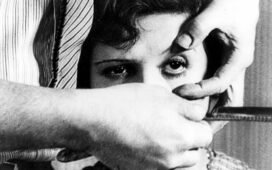

A difficult childhood and adolescence, saturated with the feeling of being an outsider, may or may not contribute to becoming a great artist. Experiencing the social and cultural ferment of Berlin and Paris in the nineteen-twenties probably wouldn’t hurt one’s chances. Nor, surely, would formative exposure in such cities to films like Metropolis, Battleship Potemkin, and Abel Gance’s Napoleon, as well as to the paintings of Pablo Picasso. Going to art school may seem like the natural choice for any aspiring artist, but there’s also something to be gained from avoiding that academic system entirely.
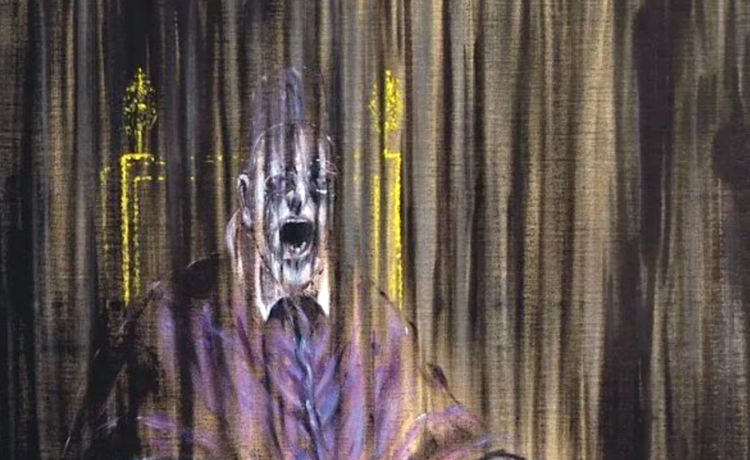
These, as gallerist-Youtuber James Payne tells us in the new Great Art Explained video above, are all aspects of the life that produced Francis Bacon. As usual on that series, he proceeds from a single representative work, in this case Study after Velázquez’s Portrait of Pope Innocent X, from 1953.
If you’ve seen that painting even once, you haven’t forgotten it, and indeed, you’ve probably seen it again in your nightmares since. To trace the source of its troubling power, Payne plunges into the history of Bacon’s harrowing life as well as that of the Irish, English, and European historical contexts in which he lived — often to its dangerous, chaotic fullest.
Not that any art historian can ignore the inspiration cited right there in the painting’s title. It is to that seventeenth-century Spaniard’s acclaimed portrait of that head of the Catholic Church (who pronounced the finished work “troppo vero”) that Bacon pays twisted, deconstructive homage. Yet despite having been to Rome, he never actually saw the original; that, as Payne explains, “would have meant facing its power directly.” Instead, he worked from a small, washed-out “copy of a copy,” all the better to allow for not just reinvention, but also the incorporation of other scraps of the rapidly expanding mass media of the twentieth century: the period, despite the out-of-time quality of so much of his art, to which Bacon so thoroughly belonged.
Related Content: