


SCIENCE

What are the most energy-efficient reactions in physics?


As long as there are still interactions occurring between objects in space, including gravitational collapse, nuclear transitions, stellar cataclysms, and anything that emits radiation of any type, our Universe will not be in the lowest-energy, maximum-entropy, equilibrium state. In the far future, if certain assumptions continue to hold true, we will, however, eventually get there. (Credit: mozZz / Adobe Stock)

Many reactions emit energy, often in large amounts, but cosmic efficiency is another metric altogether. Here’s how to maximize your output.

In terms of making things happen, energy is an indispensable consideration.

When we see something like a ball balanced precariously atop a hill, this appears to be what we call a finely-tuned state, or a state of unstable equilibrium. A much more stable position is for the ball to be down somewhere at the bottom of the valley. What we currently conceive of as our Universe’s zero-point energy may not actually be the lowest-energy state possible, which means that a transition, and an accompanying energy extraction event, may be possible. (Credit: L. Albarez-Gaume & J. Ellis, Nature Physics, 2011)

Systems spontaneously tend towards the lowest-energy state.

In many physical instances, you can find yourself trapped in a local, false minimum, unable to reach the lowest-energy state, which is known as the true minimum. Whether you receive a kick to hurdle the barrier, which can occur classically, or whether you take the purely quantum mechanical path of quantum tunneling, going from one state to another is always possible so long as no fundamental conservation laws are violated. This is an example of a first-order phase transition, rather than a smooth (second-order) transition without any false minima. (Credit: Cranberry/Wikimedia Commons)

When a system reaches equilibrium, no further energy can be extracted.

Of the three systems shown here, only the rightmost system can be considered isolated. No energy can enter or leave it, and no matter enters or leaves it, either. On the left, an open system is shown, where matter and energy can both be exchanged with the environment, and at center, a closed system which allows energy (but not matter) exchange is illustrated. (Credit: Mayyskiyysergeyy/Wikimedia Commons)

That maximum entropy, lowest energy state is the inevitable end-state of the Universe.
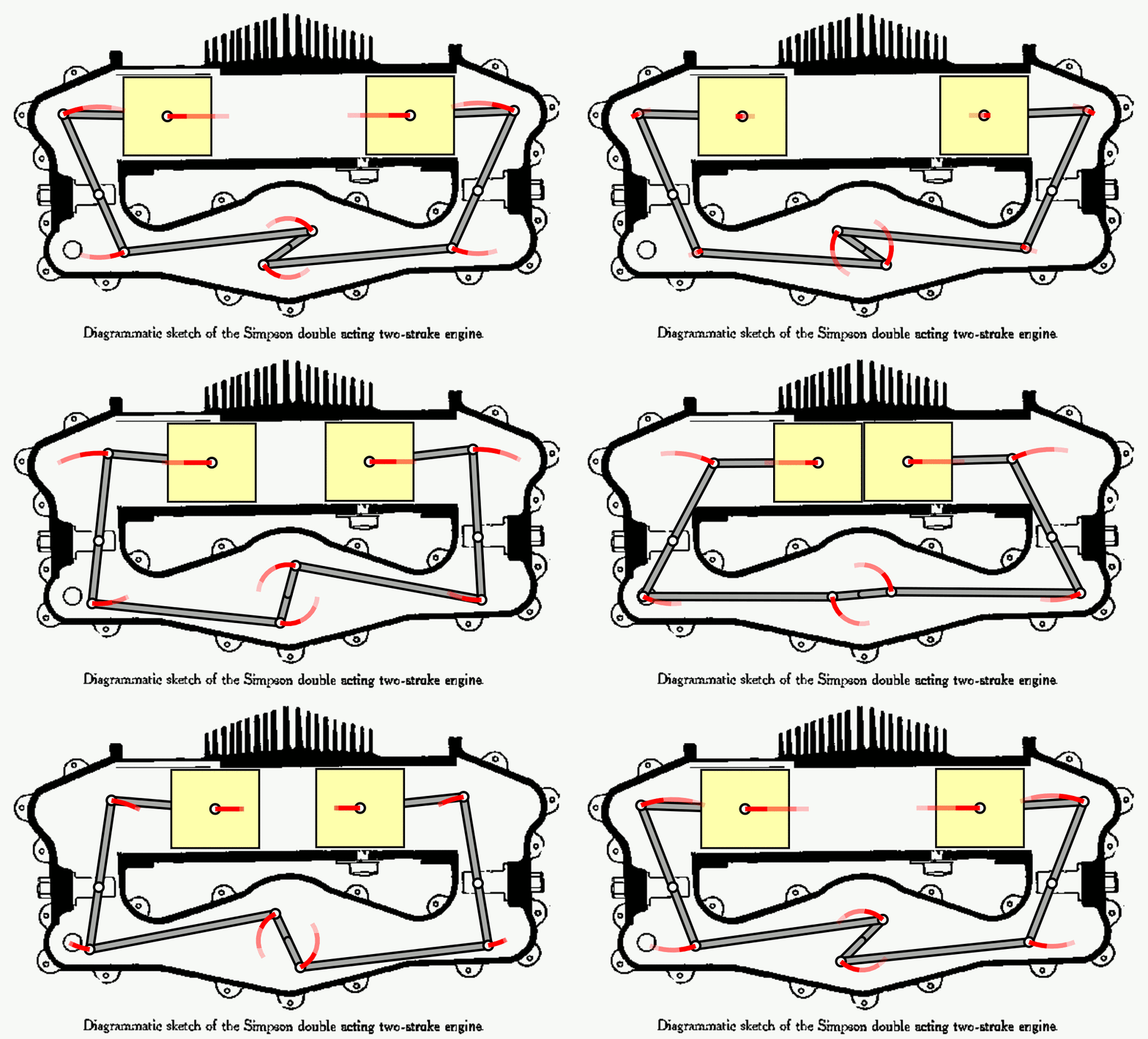
This animated diagram shows a system that’s capable of performing work and exchanging energy with its environment. Within this system itself, it is possible for entropy to increase or decrease, but that’s because it isn’t an isolated system: it exchanges energy and/or matter with its external environment. (Credit: MichaelFrey/Wikimedia Commons)

But until that moment arrives, reactions of all kinds will occur, continuing to liberate energy.
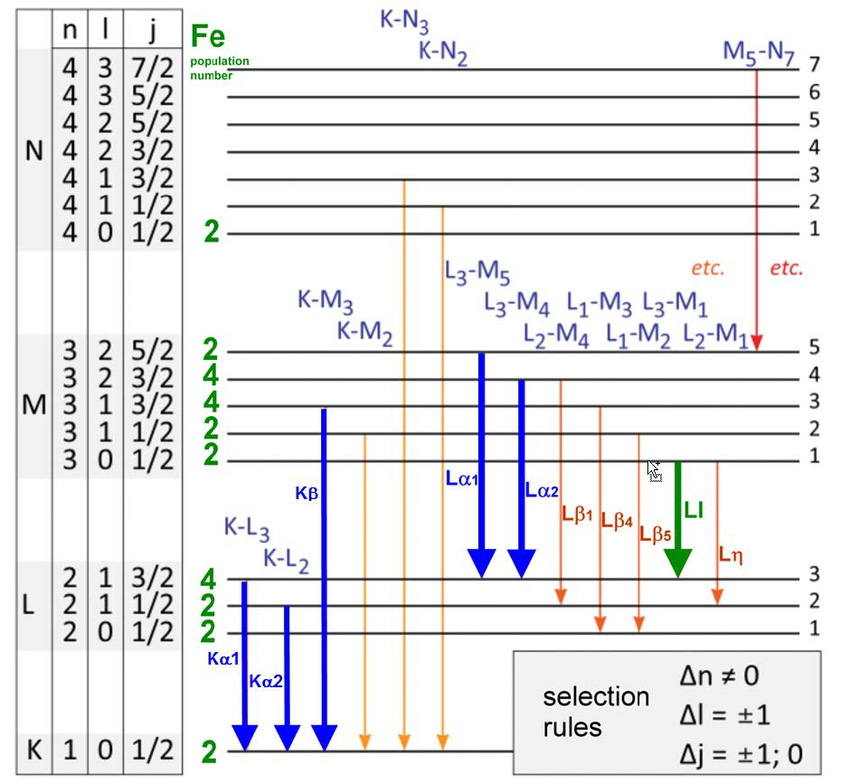
A variety of energy levels and selection rules for electron transitions in an iron atom. Although many quantum systems can be controlled to lead to extremely energy-efficient transfers, there are no biological systems that work in the same fashion. (Credit: Daniel Carlos Leite Dias Andrade et al., Conference: 25º CSBMM — Congresso da Sociedade Brasileira de Microscopia e Microanálise, 2015)

In our bodies, chemical bonds break and reform: releasing energy.
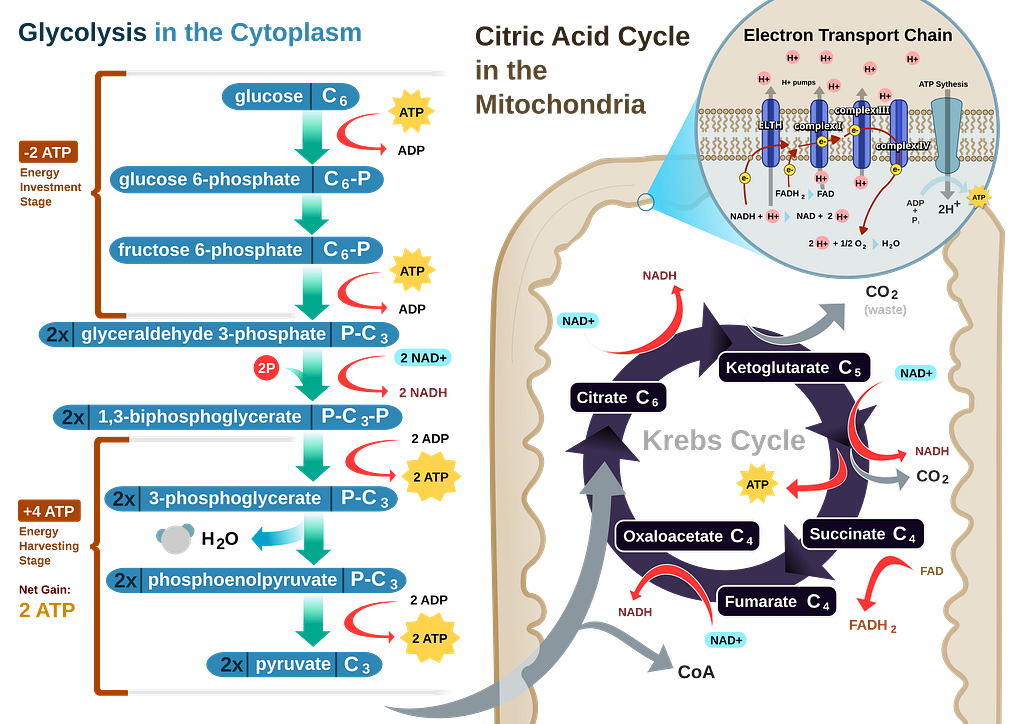
The processes of glycolysis, the Krebs (citric acid) cycle, and the electron transport chain are all at play when it comes to cellular (aerobic) respiration: one of the key aspects of most complex forms of life on Earth. Aerobic respiration is much more energy efficient than its earlier, anaerobic counterpart. (Credit: RegisFrey/Wikimedia Commons)

Aerobic respiration releases 2.88 megajoules of energy per mole of sugar.
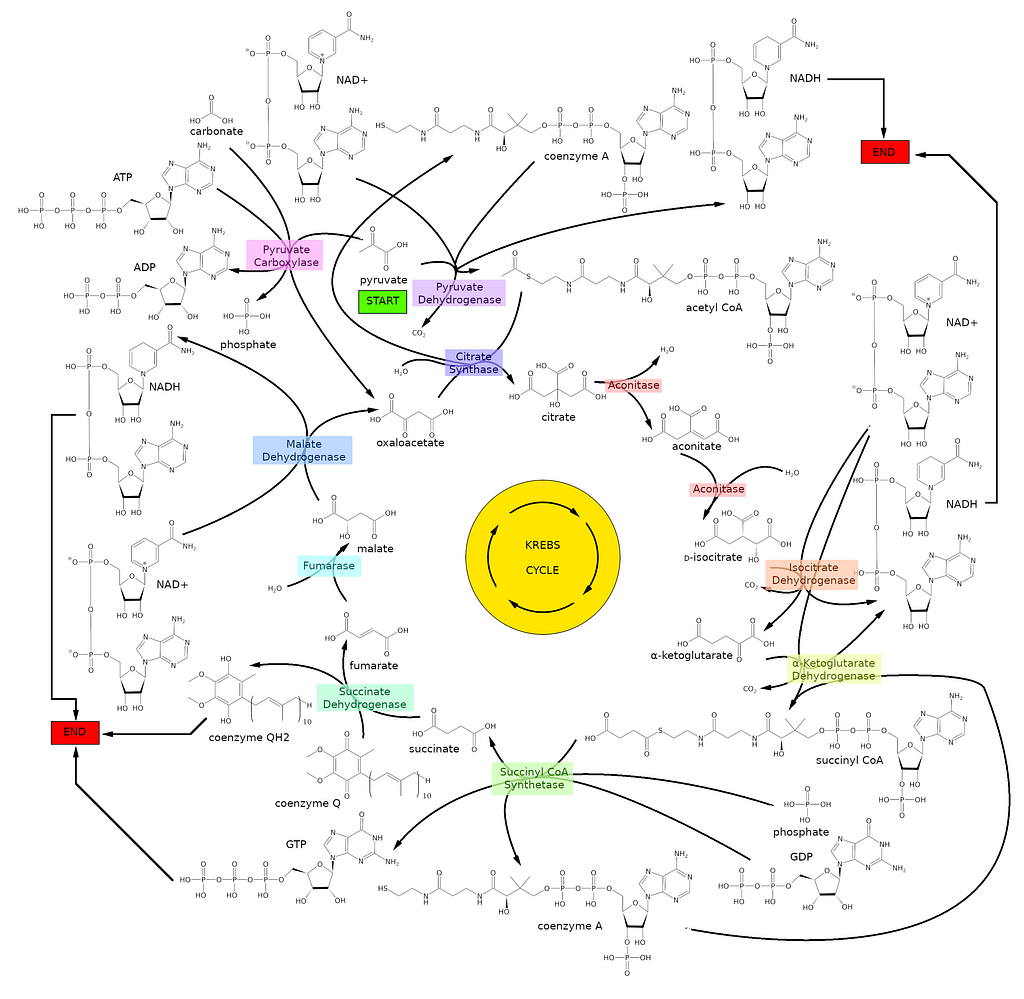
The Krebs cycle illustrated the metabolic breakdown of pyruvate, which itself arises after the glycolysis of sugar molecules, into NADH and APT. In each step, matter and the number of atoms of each species is conserved, but energy is still liberated in the breaking and re-forming of chemical bonds. Enzymes are involved in many steps, which are color-coded here. (Credit: Mplanine/Wikimedia Commons)

Only 0.0000000094% of the initial fuel’s mass converts into energy.
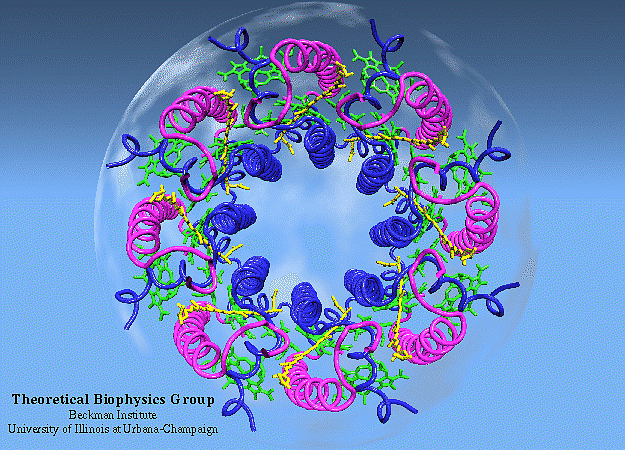
This detailed illustration shows the molecular structure of the light-harvesting complex 2 (LH2) molecule: an important molecule in transporting incident photon energy toward the photosynthetic reaction center. These antenna proteins transport energy in a highly efficient manner: a difficult-to-explain phenomenon that relies on a specific set of structures working together to produce a unique function. (Credit: Beckman Institute for Advanced Science and Technology/UIUC)

Chemical reactions are more efficient, like combustion.
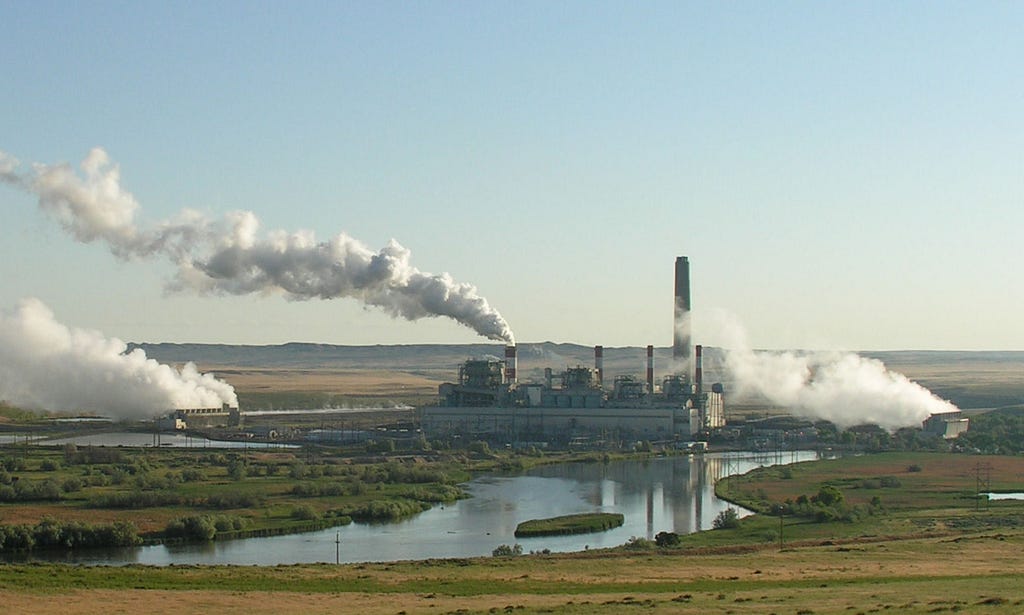
Traditional power plants, based on the combustion reactions of fossil fuels, such as the Dave Johnson coal-fired power plant shown here in Wyoming, can generate tremendous quantities of energy, but require the burning of an enormous quantity of fuel in order to do so. The ash produced by this burning sends large quantities of particulate ash into the atmosphere, where it will eventually settle into the soil and onto the ocean bottoms, where it may become incorporated into materials found in the same location, while simultaneously adding long-buried carbon molecules back into Earth’s atmosphere. (Credit: Greg Goebel/flickr)

TNT’s heat of combustion is 14.5 megajoules per kilogram: just 0.000000016% efficient.

Placing a chunk of sodium metal in contact with water results in a violent, and often explosive, reaction. This is due to the sodium donating an electron to hydrogen ions in the water, which leads to the emission of heat and the creation of hydrogen gas. When that gas combines with the atmosphere’s oxygen in the presence of heat, a combustion reaction occurs. (Credit: Tavoromann/Wikimedia Commons)

Rocket fuels, like RP-1 and mixing liquid hydrogen/oxygen, are only ~10 times more efficient.

One of the most efficient sources of chemical energy can be found in the application of rocket fuel: where liquid hydrogen fuel is combusted by burning in conjunction with oxygen. Even with this application, demonstrated here with the first launch of the Saturn I, Block II rocket from 1964, the efficiency is much, much lower than nuclear reactions are capable of achieving. (Credit: NASA/Marshall Space Flight Center)

When enriched uranium undergoes nuclear fission, efficiencies are much higher.
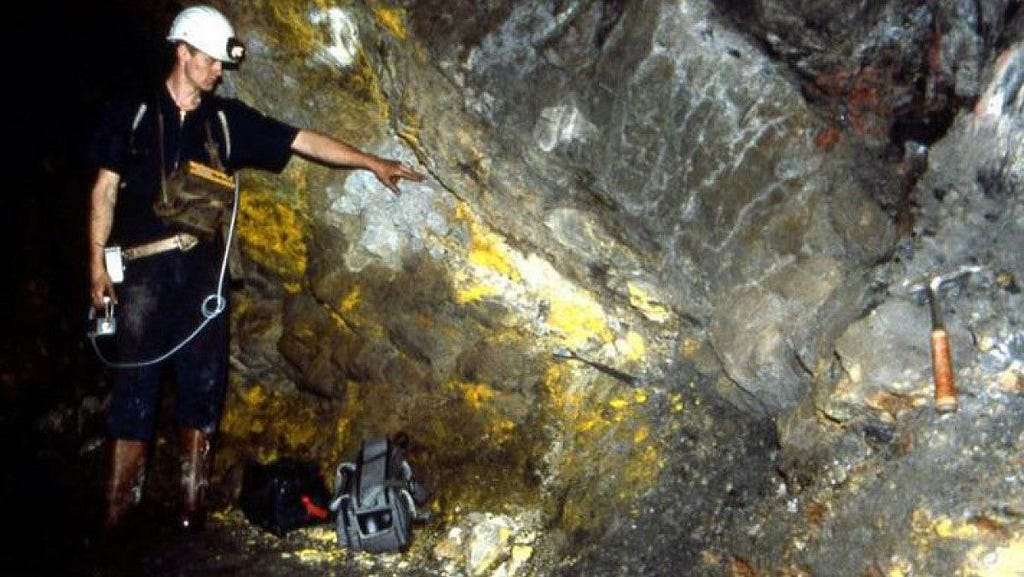
From the main mine that humans made in the Oklo region, one of the natural reactors is accessible via an offshoot, as illustrated here. The large uranium deposit present underwent nuclear fission on and off for hundreds of thousands of years some ~1.7 billion years ago. The yellow rock is uranium oxide. Oklo data shows that the fine-structure constant, which depends on the electron charge, the speed of light, and Planck’s constant, changes by less than ~0.3 parts in 10 quadrillion (10¹⁶) per year, eliminating the tired-light plus varying fundamental constant scenario. (Credit: Robert D. Loss (Curtin U.); US Dept. of Energy)

Each U-235 kilogram liberates 72 trillion joules: 0.08% efficient.
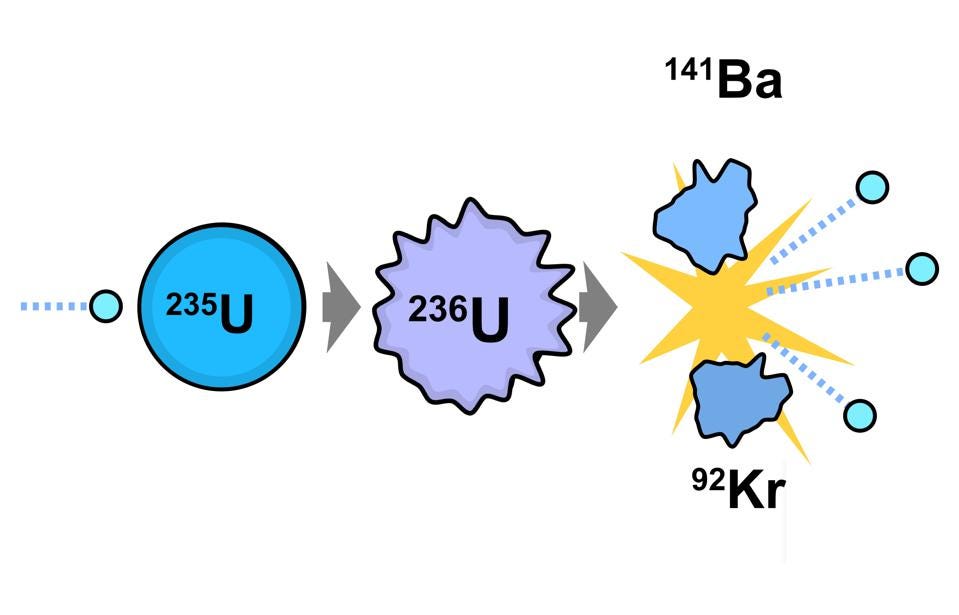
The Uranium-235 chain reaction that both leads to a nuclear fission bomb, but also generates power inside a nuclear reactor, is powered by neutron absorption as its first step, resulting in the production of three additional free neutrons. (Credit: E. Siegel, Fastfission/public domain)

Nuclear fusion, like in the Sun, liberates 630 trillion joules for each kilogram of hydrogen fuel.
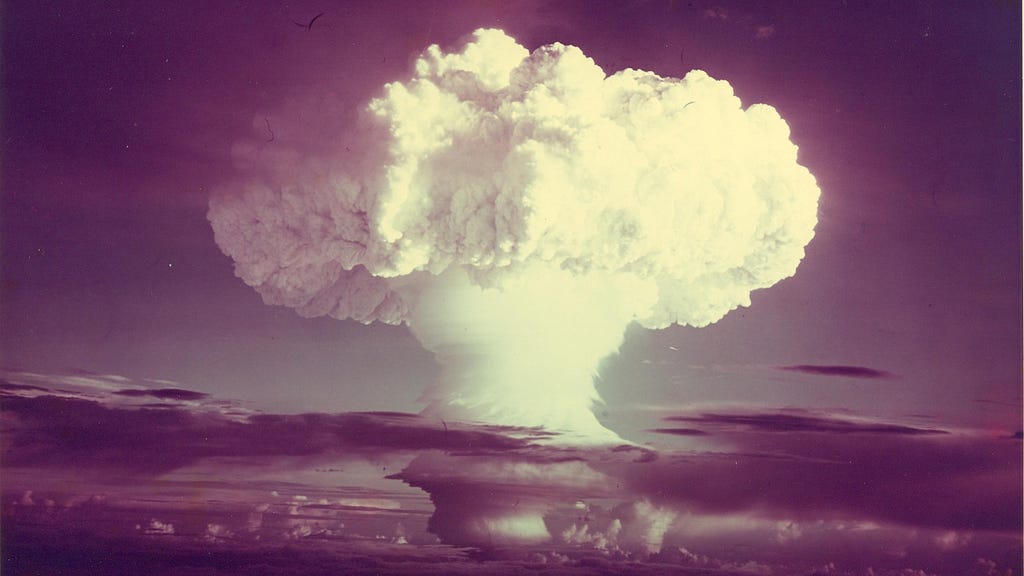
This image of the mushroom cloud arising from the 1952 hydrogen bomb test, Ivy Mike, released 10.4 Megatons of energy by leveraging hydrogen bomb technology. A release of this much energy corresponds to approximately 500 grams of matter being converted into pure energy: an astonishingly large explosion for such a tiny amount of mass. Nuclear reactions involving fission or fusion (or both, as in the case of Ivy Mike) can produce tremendously dangerous, long-term radioactive waste. (Credit: The Comprehensive Nuclear-Test-Ban Treaty Organization/flickr)

At 0.7% efficiency, it’s the holy grail of our clean energy ambitions.

The most straightforward and lowest-energy version of the proton-proton chain, which produces helium-4 from initial hydrogen fuel. Note that only the fusion of deuterium and a proton produces helium from hydrogen; all other reactions either produce hydrogen or make helium from other isotopes of helium. This reaction set occurs in the interiors of all young, hydrogen-rich stars, regardless of mass. (Credit: Sarang/Wikimedia Commons)

Stars use fusion to generate hundreds of times the energy stored even gravitationally.
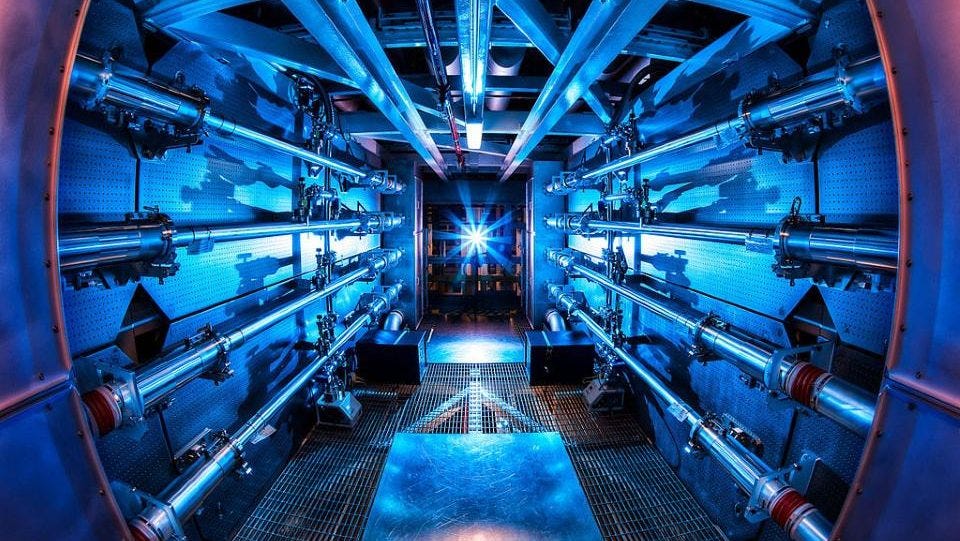
At the National Ignition Facility, located at the Lawrence Livermore National Laboratory, omnidirectional high-powered lasers heat a pellet of material to sufficient conditions to initiate nuclear fusion. The NIF can produce greater temperatures than even the center of the Sun, and in late 2022, the breakeven point was passed for the first time from the perspective of laser energy incident on the hydrogen target relative to the energy liberated from the triggered fusion reactions. (Credit: Damien Jemison/LLNL)

Only matter-antimatter annihilation is more energy efficient.

The difference between matter and antimatter is accounted for by charge conjugation symmetry: a discrete symmetry that exchanges particles for antiparticles and vice versa. Where this symmetry holds, there is an associated conserved quantity as a consequence of Noether’s theorem. Where that symmetry is violated, the conservation law no longer necessarily holds. (Credit: zombiu26 / Adobe Stock)

Mass converts 100% to energy via E = mc²: the perfect fuel source.

Whether elementary or composite, all known particles can annihilate with their antiparticle counterparts. In some cases, particles are matter and antiparticles are antimatter; in other cases, particles and antiparticles are neither matter nor antimatter, and sometimes particles are their own antiparticle, which is anticipated for many candidates for dark matter. The typical result of this annihilation is the production of two, equal-energy photons that fly off in opposite directions to one another, where the energy of each photon is given by Einstein’s E =mc², where m is the rest mass of the annihilating particle. (Credit: kotoffei / Adobe Stock)

Mostly Mute Monday tells an astronomical story in images, visuals, and no more than 200 words.

Starts With A Bang is written by Ethan Siegel, Ph.D., author of (affiliate links following) Beyond The Galaxy, Treknology, The Littlest Girl Goes Inside An Atom, and Infinite Cosmos. His latest, The Grand Cosmic Story, is out now!


What are the most energy-efficient reactions in physics? was originally published in Starts With A Bang! on Medium, where people are continuing the conversation by highlighting and responding to this story.

Source link

MarylandDigitalNews.com