
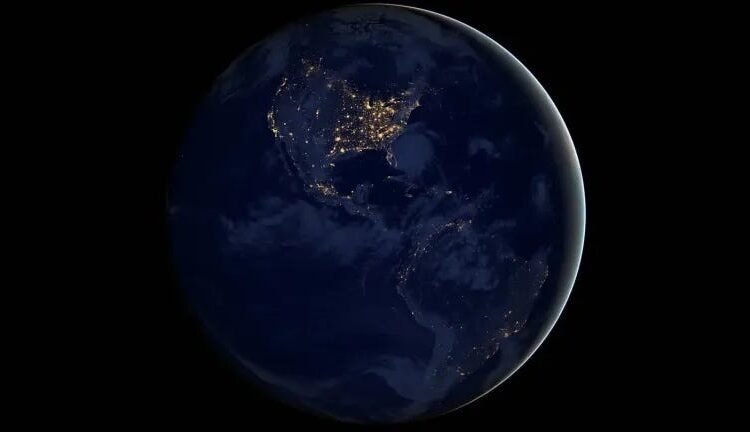
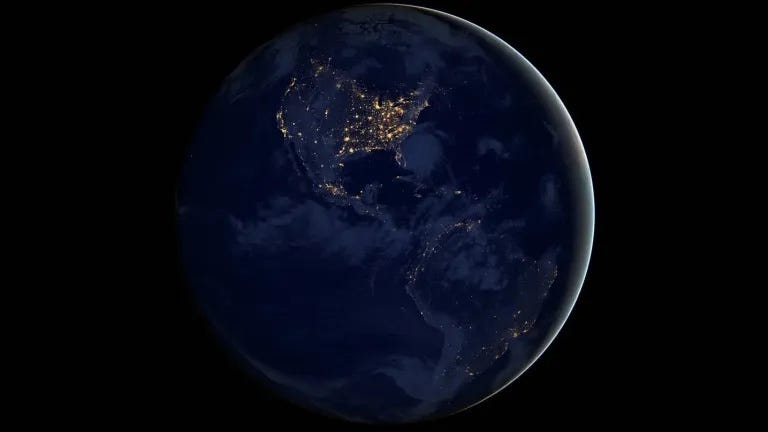
One big goal of science is to find an inhabited, Earth-like planet. But if we find an Earth-like world, will we even recognize it?
In all the known Universe, at least as of 2026, the only world known to support life is planet Earth. Despite all we’ve learned about the Universe, including:
- the vast abundance of exoplanets,
- including rocky exoplanets with Earth-like temperatures,
- the ubiquity of heavy elements,
- the commonness of organic molecules that are known precursors to life,
- and the long cosmic timescales over which stars with such planets form,
there are no known examples of worlds, other than our own, where life processes or definitive biosignatures have been detected.
Although we’ve just recently discovered our 6000th confirmed exoplanet, we’ve sent spacecraft — including orbiters, landers, and even rovers — to a wide variety of planets and moons in our own Solar System, and we’ve been listening for signs of extraterrestrial intelligence for over half a century, no other world has yet revealed signs of life: either past or present. While there are a great many reasons to believe that life is relatively common in the Universe, all three of our main methods for seeking it continue to yield only the most ambiguous and mundane hints for life’s existence elsewhere.
While searching for a world that’s similar to Earth might seem like a tempting route, there’s a huge problem that most people overlook: for nearly all of its history, Earth was inhabited, but bore little resemblance to how our planet appears today. Here’s how we can overcome that prejudice, and better search for signs of inhabited planets all throughout the Universe.

It makes sense that, as we hunt for life beyond Earth, we look for the type of signals that life creates here on Earth. Among the things we can look for, we seek:
- signals that an intelligent species of alien would generate, like mathematically ordered radio pulses,
- signs like atmospheric gases and mixtures of gases that arise from biological processes here on Earth,
- the presence of liquid water on the surface, as here on Earth water is a nearly universal environment for life to thrive in,
- and seasonal variations in the presence, absence, or concentration of signals, the same way we see carbon dioxide levels cycling here in our own atmosphere.
To be sure, these are indeed signatures that could indicate the presence of life. Life exists here on Earth, and these are some of the signals that are at least correlated with the presence of life, and therefore, if we want to find other inhabited planets, we should look for the same signals we find here. While endeavors like SETI and searches for past or present life on the worlds in our Solar System have come up empty so far, attempting to measure these signatures on exoplanets is an endeavor that’s just beginning now.
This logical line of thinking may very well bear fruit. With our current arsenal of telescopes, spacecraft, and technology, we can indeed search for these signals and more. As exoplanets transit in front of their parent stars, we can use that “filtered light” that shines through the planet’s atmosphere to deduce just what that atmosphere’s properties are.

This technology currently allows us to only measure the light filtered through Earth-sized planets around the smallest, lowest-mass stars of all: the red dwarfs of the Universe. If we want to go further to gain information about Earth-sized planets with more Earth-like properties — such as having Earth-like distances and Earth-like temperatures around Sun-like stars — we need bigger telescopes and more sensitive instruments. We also have the opportunity to not just measure the filtered starlight that travels through the planet’s atmosphere, known as transit spectroscopy, but rather to image those planets directly.
The main way to do this is through the use of a coronagraph: where the light from the parent star is blocked out, but the light from the planets surrounding it are free to arrive at our instruments. In the very near future, the next generation of space-based and ground-based telescopes will be upon us. This includes the 30-meter class telescopes on the ground like the ELT, GMT, and TMT, as well as an interesting concept known as Exo-Life Finder, which is larger than all three, but only has mirrored surfaces around the telescope’s edges. They’ll hopefully be joined in space by NASA’s future Habitable Worlds Observatory, which might be our best bet of all for directly imaging Earth-sized planets.

With a direct image of an Earth-sized exoplanet, even if what’s visible in our instruments corresponds to no more than a single pixel, we can observe all sorts of things that occur on our planet. In the short-term, the things that we might consider looking for include:
- The planet’s overall rotation rate, as different features periodically rotate into and out of view.
- A rough map of the continents and oceans, revealed by the “bluer” parts of the planet rotating in-and-out of view.
- The abundances of other notable features from the planet’s rotation: continents and ices, including ices from glaciers, mountaintops, and polar icecaps.
- And cloud cover and how it changes over time as they form and dissolve and as the planet rotates, where a spectral analysis could even reveal the cloud composition.
Observing over much longer periods of time, including seeing the exoplanet at various times throughout the exoplanet’s year, can lead to additional information about the planet’s properties as well. We might think about:
- The growth or shrinkage of polar icecaps over time, depending on the exoplanet’s tilt towards or away from the parent star.
- The potential greening-and-browning of the continents with seasonal variations, with spectral signatures potentially revealing the chemical products powering life on that world.
- The presence or absence of any large, massive satellites, which should create orbital variations in the planet’s motion itself.
- And the presence or absence of a planet-wide magnetic field, detectable from the polarization of light from the planet and the Faraday rotation it does or doesn’t exhibit.
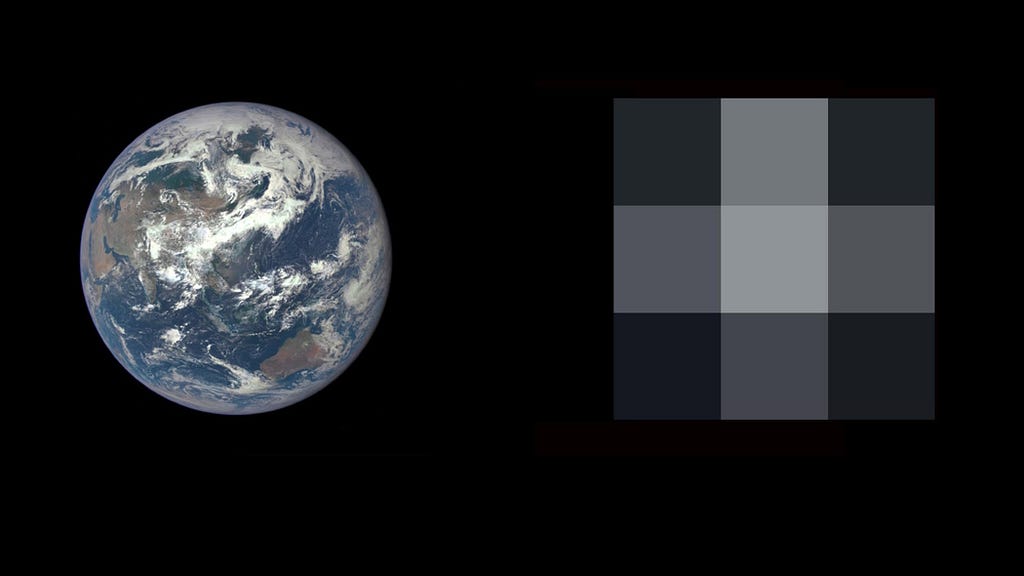
All of these features, if we were to observe Earth from afar with the technology we’re currently developing, would be readily apparent once our telescope and instrumentation’s ability caught up to our ambitions.
But this overlooks a huge blind spot: the fact that we are talking about detecting life on an exoplanet that has the same properties that Earth has today. Sure, it would be great to find a planet that looks very similar to how Earth looks right now, as perhaps the loftiest of our goals in seeking extraterrestrial life isn’t simply to find an inhabited planet, but one that has complex, differentiated, intelligent, and even technologically advanced life.
Unfortunately, those signatures are unlikely to be present on the majority of inhabited planets. We know this from experience: for the majority of planet Earth’s history, we didn’t have those features. Life only became technologically advanced on Earth over the most recent few centuries. Life only became intelligent with the rise of large-brained mammals, like us and our direct ancestors. Life only became complex, differentiated, and colonized the continental land on Earth a few hundred million years ago. But our planet, to the best of our knowledge, has had life on it for at least the past 3.8 billion years — most of Earth’s history — and for possibly even longer than that.

For a stunning example, consider the composition of Earth’s atmosphere. If we consider the atmosphere today, it’s made up of:
- 78% nitrogen gas,
- 21% oxygen gas,
- about 1% argon gas,
- a variable amount of water vapor, which ranges from approximately 0–2%,
- about 0.04% carbon dioxide,
along with trace amounts of other gases, like ozone and methane.
Now, let’s rewind the clock to times that were significantly farther back in Earth’s history.
- 500 million years ago, there was much less oxygen and ozone, but much greater amounts of methane.
- 1 bilion years ago, there was no ozone at all, and methane levels were still higher.
- 2 billion years ago, there was much more carbon dioxide.
- 3 billion years ago, there was almost no oxygen, but enormous amounts of methane and even greater amounts of carbon dioxide.
And yet, all throughout that time, Earth was not just inhabited, but life was thriving and rapidly evolving on the surface, despite all the physical, chemical, and biological changes that have occurred over those geologically long timescales. Looking for the balance of gases in the atmosphere that matches the balance of today would be an example of overly restricting our search to planets that are similar to Earth in a way that would exclude most Earth-like planets throughout Earth’s entire history.
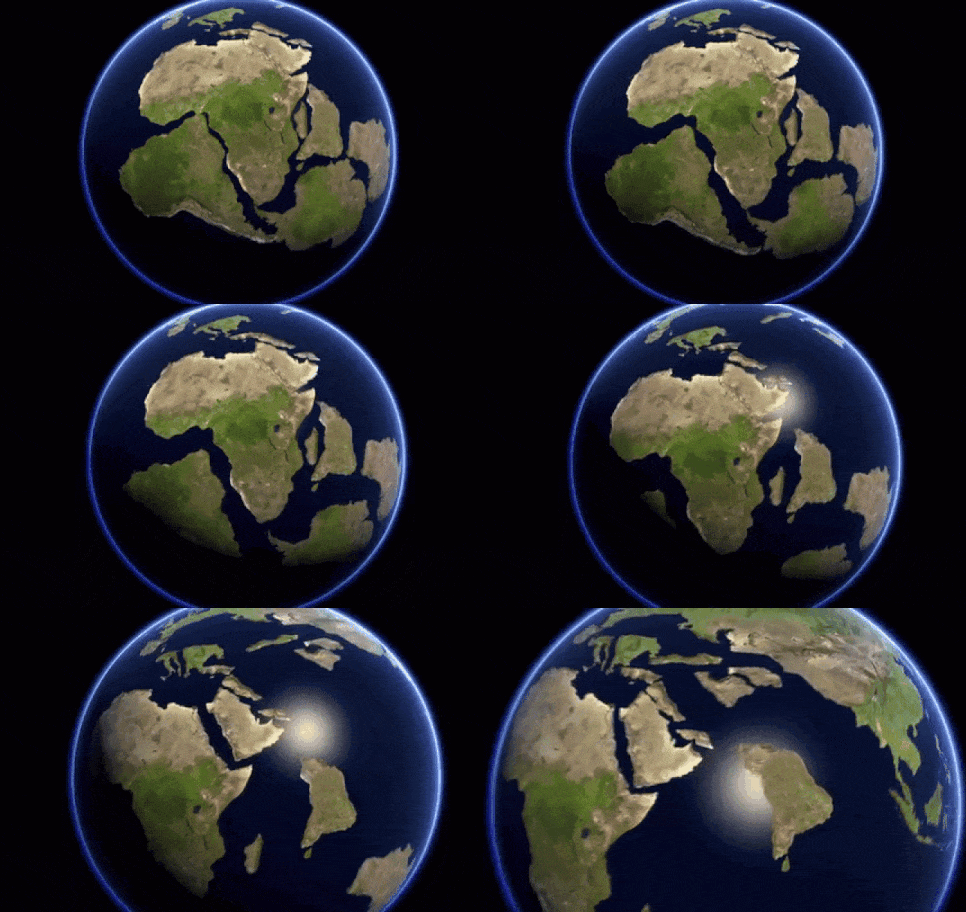
Today, we have seven continents ranging in size from Australia to Asia, with multiple independent oceans separating them. But 200 million years ago, we had just a single supercontinent, Pangaea, and an enormous superocean surrounding it: where one ocean covers more than 50% of the planet’s surface. Planet Earth has gone through many periods where supercontinents and superoceans were the norm, and many others where multiple continents and multiple separate, independent oceans covered Earth’s surface.
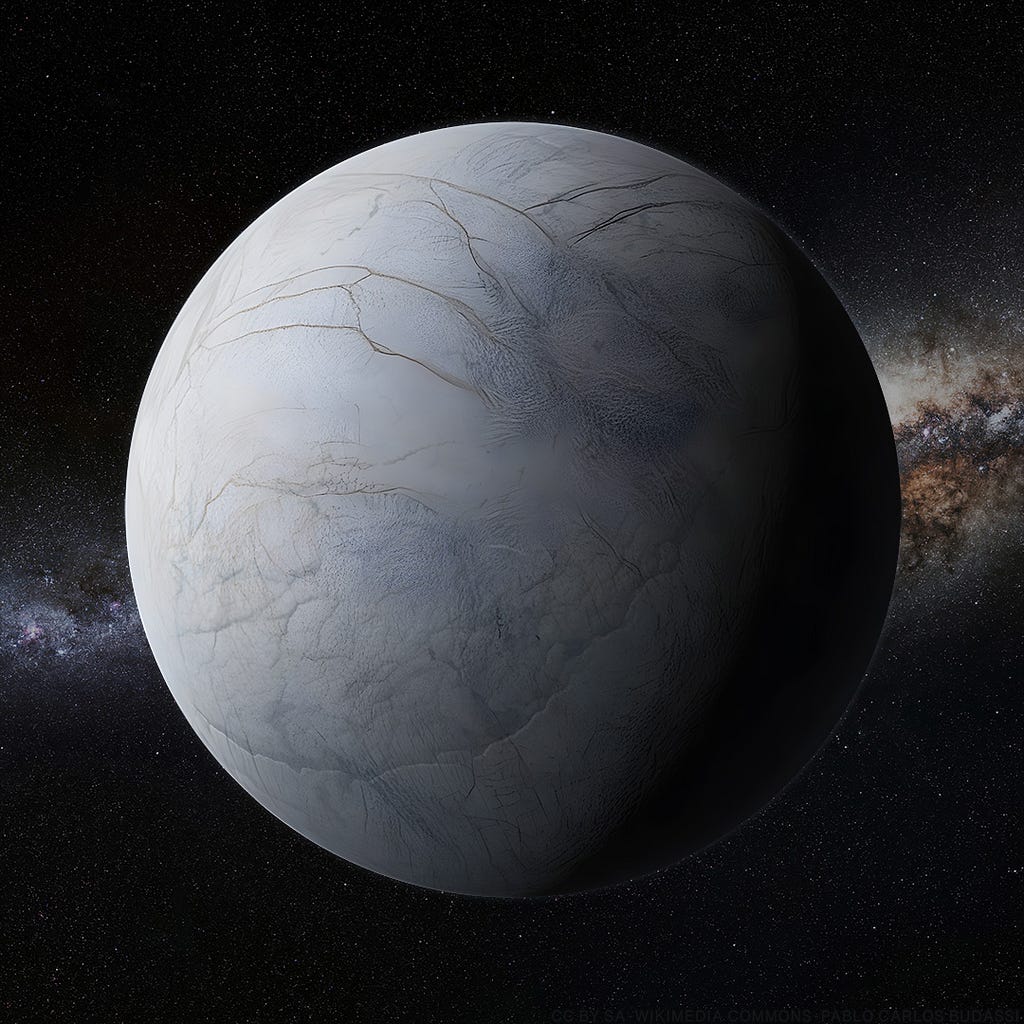
We went through periods where our icecaps were large and substantial, advancing in the cold winter months and retreating in the warm summer months, similar to what we see today. But we also went through periods where the Earth was completely ice-free: where there were no polar caps at either pole. Conversely, perhaps the most “alien” that Earth ever looked to us would be during those periods where the entire planet was covered in ice and snow, blanketing the continents and oceans alike. Multiple planet-wide glaciations occurred between 720 and 635 million years ago, and there was a whopping 300 million year period more than 2 billion years ago where the entire globe was frozen over: a true Snowball Earth set of conditions.
Additionally, we’re extremely familiar with our planet as it is today: in the era of macroscopically large organisms, particularly in the animal, plant, and fungal kingdoms. But these are relatively new arrivals on Earth; all three kingdoms are less than one billion years old. The greening of the continents, a hallmark of plant life thriving on the surface, is an even newer arrival: not until the Devonian period, or around 400 million years ago, did it first occur. If we were looking for biosignatures and thought, “oh, I’ll just look for worlds where the continents change colors during various seasons throughout the year,” we’d be omitting about 90% of the time that Earth had life on it.
Perhaps the greatest pitfall we could succumb to is also a very tempting one: to look for the abundant presence of oxygen in an Earth-sized planet’s atmosphere. Although our planet’s oxygen levels have fluctuated wildly over the past few hundred million years — since the widespread development of plant and animal life — changes were gradual and oxygen levels were much lower during most of Earth’s history. This is particularly important for three reasons:
- Oxygen is mainly produced on Earth as a by-product of photosynthesis, which itself is a life process.
- There are plenty of inorganic/abiotic pathways to produce oxygen under laboratory conditions, and these could be at play on an exoplanet.
- And there is no guarantee that oxygen is the by-product that life would produce by harvesting energy the way it is on Earth.
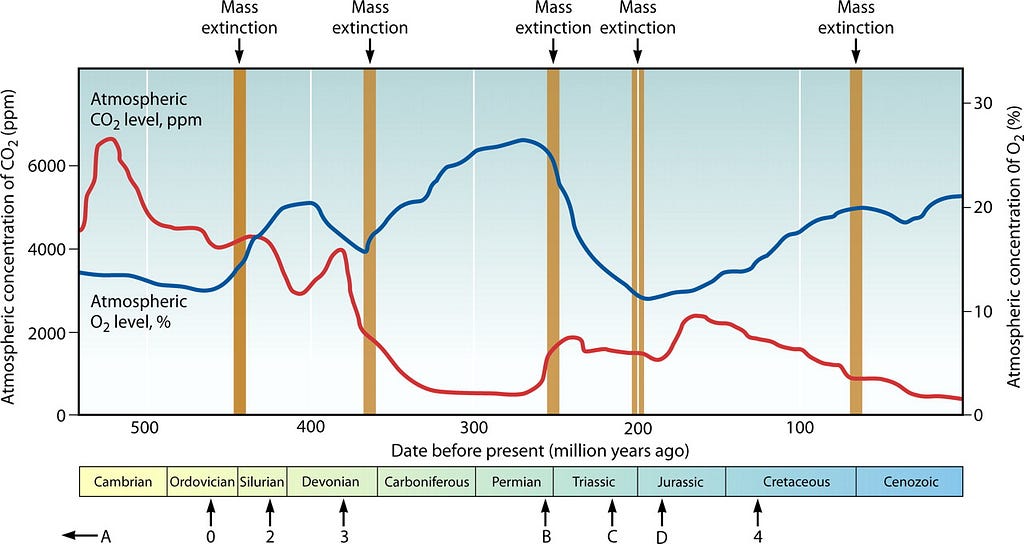
In fact, for the first nearly 2 billion years of Earth’s history, there was no appreciable oxygen in the planet’s atmosphere at all. And yet, during at least most (and possibly all) of that time, Earth was indeed an inhabited planet. Because we only have a sample size of one — our one planet that we know to be inhabited because we’re here inhabiting it — we assume that, much like has been the case on Earth over the second half of our planet’s history, that an inhabited planet would exhibit atmospheric qualities that represented an equilibrium state that accounted for the feedback between:
- external and internal energy sources (like the Sun and volcanic activity),
- solids, liquids, and gases on the planet (including between the atmosphere and oceans),
- and the biological processes that various forms of life induce (including gas exchange and various biochemical reactions).
We typically assume that if one factor changes, the remaining factors will change in response. If there’s more carbon dioxide in the atmosphere and less oxygen, for example, animals will be smaller and plants will thrive under those conditions, changing the balance of life. Then, with fewer and smaller oxygen-consuming animals and more plants gobbling up carbon dioxide and producing oxygen, the balance will change, eventually reaching equilibrium. However, this only happens in a biosphere that’s saturated with life; there is no guarantee that most inhabited planets would have had this occur.

This is why, in our hunt for alien life, we shouldn’t wed ourselves to the idea that life elsewhere is similar to life on Earth. Moreover, we have to be extremely cautious in considering “modern Earth” as a proxy for the types of inhabited exoplanets that we should be searching for. Earth has been around for 4.5 billion years, and has been inhabited for at least 85% (and possibly more) of our planet’s history. But the type of conditions we have today, where:
- plant life has overrun the continents,
- icecaps grow and retreat with the seasons,
- multiple oceans and continents dominate Earth’s surface,
- and we have an oxygen-rich and nitrogen-rich atmosphere with only small amounts of other gases,
are not at all representative of Earth during the majority of its history.
There are two main risks when it comes to the science of searching for extraterrestrial life. The first risk, which we’re probably very familiar with, is to falsely claim the detection of life beyond Earth when we have yet to rule out non-biological explanations. Claims of life all throughout the Universe — from the Wow! signal to fossilized Martian life to claims of alien technology at the bottom of the sea — always make headlines, but not a single claim yet has held up under scrutiny. However, the second risk won’t make any headlines at all: it’s what happens if we find an inhabited planet, but didn’t look closely enough at it to realize there was life on it after all.
We mustn’t assume that life elsewhere is necessarily similar to life here, or that an inhabited exoplanet’s biosphere will have the same properties that Earth, today, possesses. Indeed, Earth’s properties have changed dramatically over the course of its inhabited history, and will likely change further as life on our world continues to evolve. We must begin by looking for planets that share key properties with Earth throughout all of its history in the hunt for alien life, and then broaden it from there. Otherwise, we run the risk of dismissing a living world just because it wasn’t “Earth-like” enough to satisfy our own prejudices.
Starts With A Bang is written by Ethan Siegel, Ph.D., author of (affiliate links following) Beyond The Galaxy, Treknology, The Littlest Girl Goes Inside An Atom, and Infinite Cosmos. His latest, The Grand Cosmic Story, is out now!
The biggest overlooked problem in the hunt for alien Earths was originally published in Starts With A Bang! on Medium, where people are continuing the conversation by highlighting and responding to this story.