
If you’re someone who makes New Year resolutions in January – how long did they last? Trying to “start afresh” in the middle of winter doesn’t tend to work, and for good reason…
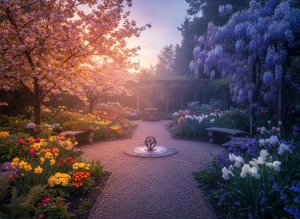 The spring equinox is different. It’s the point in the year when day and night are in balance, and from that moment on (in the northern hemisphere) the light starts winning. Buds swell. Birds get busy. Soil warms. Life springs forward.
Spring is the real New Year, especially in the garden.
Old-world timing: when the year began in spring
A lot of older cultures anchored “new year” around springtime because it’s when the world actually resets. Even in the Roman world, January as the start of the year was largely an administrative decision — not a natural one.
Spring makes intuitive sense:
- It’s when growth begins again
- It’s when we can see change happening daily
- It’s when plans can turn into action without fighting the weather
In other words, spring is the season that rewards momentum.
At the equinox, the sun crosses the celestial equator – a clean, observable turning point. In astrological language, it’s the start of Aries (the first sign in the zodiac), which is why so many “first sign / first month” systems point back to this moment.
You don’t have to be an astrologer to appreciate the symbolism: balance, then forward motion.
And if you do enjoy the mystery-school lens, the equinox is one of those “hinge points” where people have always watched the heavens and asked: What’s beginning now? What’s being asked of us?
Why it feels especially significant right now
Even without getting too technical, most of us can sense we’re living through a period that calls for recalibration.
- Old ways of doing things feel less reliable
- Costs are higher, time feels tighter
- People want their homes (and gardens) to work harder: for rest, for beauty, for wellbeing and if they’ve got any sense, growing food!
That’s why the equinox is such a useful moment. It’s a natural prompt to stop drifting and choose a direction.
And here’s the key: choosing a direction is a design decision.
The garden version of “New Year”: stop adding, start designing
This is where I see so many gardeners accidentally waste money.
A plant here. A pot there. A new border edge. A random feature that looked good on Instagram.
And because those additions aren’t part of an overall layout, they rarely change how the garden feels or functions. The garden stays awkward, just with more stuff in it.
Spring is the perfect time to break that cycle.
Because spring energy makes us want to act and the equinox is your reminder to put that energy into the thing that creates the biggest transformation – the layout.
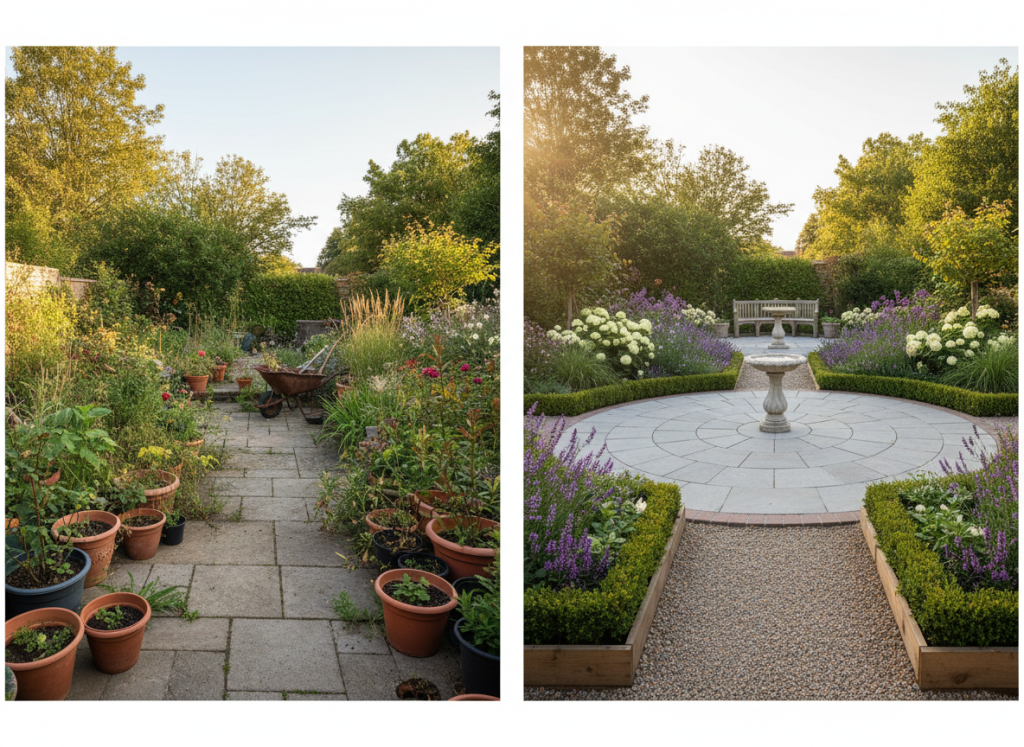
Pencil to paper: the “equinox reset” that actually works
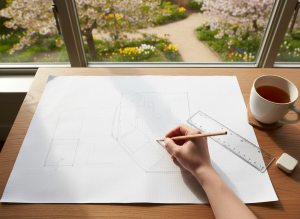
In my courses, I teach a design formula first approach because it saves people from expensive trial-and-error.
One of the most important principles is this:
If the scale design works on paper, it will work in the garden.
And the opposite is also true. If you’re guessing sizes, or making changes “in your head,” you can end up trying to force something on site that simply doesn’t fit.
That’s why I recommend starting with:
- A scale plan (so you’re working in real proportions)
- The right shapes and layout (before you think about plants)
- A clear purpose for each area (so the garden supports your life)
Plants matter, of course, but they’re not the foundation. They’re the finishing layer – the icing on a sumptuous cake!
The equinox question to ask yourself
If spring is the real New Year, then this is the question that matters:
What design layout would improve how I enjoy my garden this year?
Not “what can I buy?”
Not “what can I add?”
But: what change would shift the whole experience?
That’s the design mindset, and it’s how you get a garden that feels intentional, not accidental.
Want to see the method in action?
If you’d like me to walk you through the approach, I demonstrate the core principles in my free online garden design class here:
Consider it your spring equinox reset: a way to start the real New Year with a plan that saves you time, money, and a whole lot of garden frustration. And if you’d like to do the complete garden design course, there’s a special half-price offer at the end of the class!