

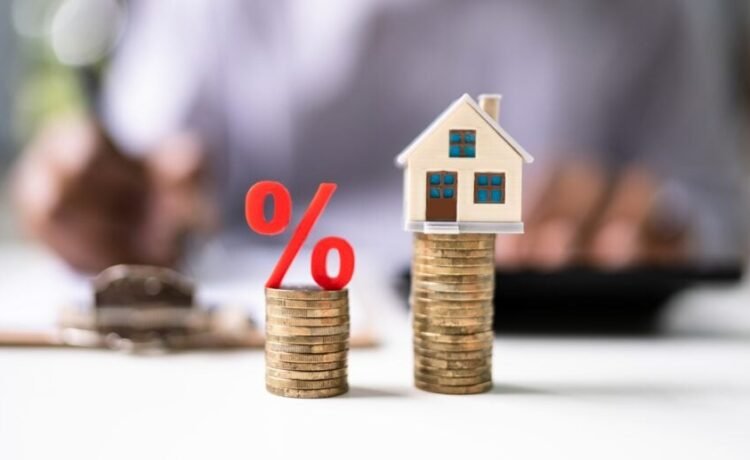
Mortgage rates have hit their lowest levels in three years, and while that should be a cause for celebration from prospective homebuyers, it hasn’t translated into greater sales. In fact, it could trigger the opposite: a greater affordability crisis.
According to brokerage and listings site Redfin, 13.7% of homes that went under contract in January fell through—the highest share ever recorded for that month. There are two main reasons for this.
First, it’s a buyer’s market, so they can afford to pick and choose. However, the second reason has greater repercussions for investors: financial insecurity.
Many buyers are walking away from deals because they are worried about the additional costs of owning a home—taxes, insurance, and maintenance—all of which are soaring. Additionally, there is job insecurity and the fear of how tariffs will affect their business and income, which, coupled with the overall cost of living, from food prices to furnishings and energy costs, has many buyers fearful about using a large lump of cash for a down payment and then being on the line for a cadre of monthly expenses they didn’t have when they were renting.
“They’re second-guessing the wisdom of making a huge purchase when there’s a fear in the back of their mind about the state of the economy and the uncertainty of their finances,” Los Angeles real estate agent Alin Glogovicean told Redfin’s news site. “That’s particularly true when they’re first-time buyers who don’t have equity from a previous home sale, and they’re using most or all of their savings on a down payment.”
Mortgage Rates Fall, But Affordability Barely Moves
Despite mortgage rates dropping below 6.1%, NAR’s chief economist Lawrence Yun says that has not translated into sales. He said in a press release:
“Improving affordability conditions have yet to induce more buying activity…Unless housing supply increases, these additional potential buyers becoming active in the market could simply push up home prices. This will put increasing pressure on affordability, which is why it is critical to increase supply by building more homes.”
The market is not monolithic, and while sales are stagnant nationally, Realtor.com reports that these markets saw increased sales year over year as of January:
- Phoenix-Mesa-Chandler, AZ: +11.8%
- Boston-Cambridge-Newton, MA-NH: +10.7%
- Charlotte-Concord-Gastonia, NC-SC: +10.7%
- San Francisco-Oakland-Fremont, CA: +8.9%
- Oklahoma City, OK: +8.7%
How Cheaper Rates Make Homes Less Affordable
As a recent HousingWire article points out, analyzing data from Zillow, Redfin, and Realtor.com shows that past episodes of sharply lower mortgage rates triggered rapid price appreciation that more than offset the savings from cheaper financing, particularly during the pandemic-era boom, leaving buyers facing higher monthly payments despite lower interest rates.
As yet, there has not been a sudden price increase, partly because the interest rate decreases have been gradual. The drop from about 6.96% in early 2025 to roughly 6.1% a year later, along with modest income gains, has given a medium-income household more than $30,000 in additional pricing power compared to a year ago, according to Fox Business, using Zillow research.
How Real Estate Investors Should Navigate the Current Market
Investors looking to stay active in the current market have a few options.
Buy with cash and negotiate
Whether you use your own cash or hard money with a plan to refinance, making an all-cash offer when houses aren’t selling and buyers are backing out gives you negotiating power. Finding a motivated seller and striking a deal will stand you in good stead when rates drop further and prices increase.
Buy now with a fixed-interest loan and service the debt
An interest rate of around 6% is nothing to sneeze at, especially considering where we were a couple of years ago. The good news is that house prices have only moved incrementally recently, so lock something in now, service the debt with rents, and enjoy the tax benefits—hoping to cash flow at 6% in most markets is a tad optimistic—and plan to make a move when things pick up, either through lower rents or an increase in prices.
Buy a small multifamily with an FHA loan
This old chestnut works in most markets because you’re always going to need somewhere to live, so you might as well have your tenants help you do it.
At around 6%, your mortgage payment, when buttressed by your tenants’ rents, will be affordable, and after a year, you can see where the market is and either refinance this home into a regular loan, rise and repeat elsewhere, or stay put and save for another investment. The great thing about an FHA loan is that you only need to put 3.5% down, and your credit doesn’t have to be stellar.
Move to a much cheaper market and start accruing rentals.
If you have equity in your personal residence, live in an expensive market, and have flexibility about where you can live and work, selling and moving to a cheaper market could help you kick-start your investment career.
If you have lived in your primary residence for two out of the past five years, you will be eligible to avoid capital gains taxes on $250,000 (if single) or $500,000 (if married) in profits (that amount could be dramatically increasing), which could serve as a down payment in less expensive areas on a few rentals. If one of those rentals is also a small multifamily where you live, you have just jump-started your retirement.
Final Thoughts
It would almost be easier to strategize if interest rates were higher, because your options would be more clear-cut. A 6% interest rate tempts you to stick a toe in the water—and only hope that a shark doesn’t come and grab hold of your ankle!
But remember that taxes and insurance are still high, as is the cost of living, so an interest rate drop by half a point or even a point probably doesn’t move the needle much in your overall finances from where they were a year ago. However, the same goes for renters who need a place to live but can’t afford to buy.
Thus, if you buy a rental in a decent area now, you are likely to have a line of applicants. The important thing is to buy sensibly, not exhaust your reserves, and not rely on making much, if any, cash flow in the short term.