
MHT is excited to announce the FY26 recipients of our Historic Preservation Non-Capital grants! Funded through the Maryland Heritage Areas Authority Financing Fund, this grant program supports a wide variety of research, survey, planning, and educational activities involving architectural, archaeological, or cultural resources.
This year, a total of $300,000 is being awarded to non-profit organizations and universities for a diverse slate of nine projects across the state. Below are descriptions of all the projects awarded:
An Archeological Survey of Hockley – Patapsco Heritage Greenway ($26,000)
Phase I and II archaeological investigations will be performed at Hockley (HO-387), believed to have been built between 1763-1764 as a forge master’s dwelling for an iron works known as The Baltimore Company. Goals include assessing if there are intact archaeological resources at the site and determining the locations of the industrial buildings associated with the old forge master’s home. The project includes hiring 1-2 graduate student assistants to help perform excavations, supervise volunteers, and catalog artifacts.

Of Kings, Queens, and Common Rafters: Maryland’s Early Roof Frames – The Lost Towns Project ($61,000)
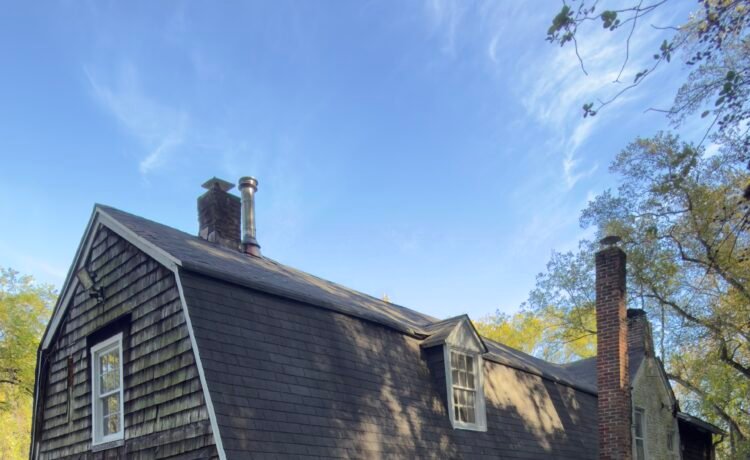
This project, a focused architectural investigation of early roof framing, will document approximately ten buildings representing a broad cross-section of the extant architectural record in Maryland, emphasizing diversity in geography, building type, and structural complexity. Final products will include scans of all field documentation, six 3D models, an interpretive report, and photographic documentation of each site.

Foundations of Maryland: Archaeological Survey of Early Kent Island – Historic Kent Island ($40,000)
Coordinated archaeological survey will be conducted across historically linked landscapes on Kent Island, Maryland’s earliest English settlement. Tracts with previously identified early colonial archaeological resources will be systematically surveyed and examined to better define site boundaries. Previously unsurveyed tracts with early settlement histories will also be surveyed to locate new resources that better characterize the early 17th-century landscape of Kent Island. The project will use archival analysis, GIS mapping, remote sensing (GPR, magnetometry, LiDAR, photogrammetry), and targeted shovel testing to identify and evaluate surviving cultural features. Shoreline loss, development pressure, and natural decay pose imminent threats, making this a time-sensitive undertaking.

Our Lady of Mount Carmel: Preserving 100 Years of Education – Our Lady of Mount Carmel School ($19,000)
This project includes the preparation of a National Register nomination for Our Lady of Mount Carmel Church and School in Essex, Maryland. The complex includes five buildings, constructed between 1920 and 1960, reflecting the Mission Revival and Mid-Century Modern styles. This property also espouses the broader significance of immigration and labor history in Baltimore County.

Phase I Archaeological Testing of the Springfield Farm Site – Washington County Historical Society ($15,000)
The project will conduct a Phase I archaeological survey on two parcels of land owned by the Town of Williamsport, which contain the core of the 18th- to 19th-century structural complex known as the Springfield Farm and once owned by Revolutionary War Brigadier General Otho Williams. The goal of the project is to identify and document archaeological and cultural resources on the property in order to develop a site management plan. This will be achieved by conducting archival research, informant interviews, collections review, systematic surface collection and shovel test survey, artifact processing and analysis, and a report with a collection database.

Resilience: Surveying and Documenting Anne Arundel County’s Queenstown Community – Severn Improvement Association ($30,000)
This project will document the historically African American community of Queenstown in northern Anne Arundel County as a survey district in the Maryland Inventory of Historic Properties. In partnership with the University of Maryland Libraries, the Severn Improvement Association will also complete oral history interviews with senior residents about the evolution of the neighborhood, including traditions and milestones.

Oak Spring Historic District – Montgomery Preservation ($29,000)
This project will produce a National Register nomination for the Oak Spring Historic District, a community of 84 single-family residences designed by the architectural firm Deigert & Yerkes and constructed between 1964 and 1966 in Montgomery County. Oak Spring represents a turning point in regional development when local builders began applying modern architectural ideals to speculative suburban housing; houses in the district exemplify mid-century modern residential architecture through low-pitched roofs, broad eaves, large picture windows, efficient interior plans, and natural materials of brick and wood.

Waverly Main Street Historic Buildings Rehabilitation Feasibility and Planning Study – Baltimore Neighborhood Business District ($58,000)
Maryland Inventory of Historic Properties (MIHP) documentation and building conditions assessment reports will be prepared for approximately twelve to fifteen structures within the Waverly Main Street Historic District along Greenmount Avenue in Baltimore. These historic commercial buildings, constructed between 1880 and 1960, retain distinctive architectural features and reflect more than a century of neighborhood-based commerce, including Black-owned businesses, immigrant storefronts, automotive-era service buildings, and early 20th-century retail architecture.

Trowels to Teaching Program – Towson University ($22,000)
In 2025, Towson University held the first Trowels to Teaching workshop for Maryland K-12 teachers at North Point State Park. The goal of the workshop was to provide an opportunity for teachers to become familiar with the process, importance, and goals of the field of archaeology in order to effectively infuse these topics into their classrooms and promote responsible archaeological stewardship in Maryland communities. This project will fund a return to North Point State Park in 2026 to conduct a second year of the workshop and investigate a different site, a buried cultural horizon at the precontact Krankowski Site (18BA631).

Availability of FY2027 funds through the Historic Preservation Non-Capital Grant Program will be announced in late spring of 2026 on MHT’s Historic Preservation Non-Capital Grant Program webpage. Application deadlines and workshop dates will also be found on this page at that time.
For more information about the grant program, please contact Heather Barrett, Administrator of Architectural Research at MHT, at 410-697-9536 or heather.barrett@maryland.gov or Matt McKnight, Chief Archaeologist, at 410-697-9572 or matthew.mcknight@maryland.gov. For information about organizations receiving grants, please contact the institutions directly.
Discover more from Our History, Our Heritage
Subscribe to get the latest posts sent to your email.