
Antonio Vivaldi’s The Four Seasons reigns as one of the world’s most recognizable early 18th-century pieces, thanks to its frequent appearances in films and television commercials.
Upon its debut in 1725, The Four Seasons stunned listeners by telling a story without the help of a human voice. Vivaldi drew on four existing sonnets (possibly of his own provenance), using strings to paint a narrative filled with spring thunderstorms, summer’s swelter, autumnal hunts and harvests, and the icy winds of winter.
The composer studded his score with precisely placed lines from the sonnets, to convey his expectations that the musicians would use their instruments to sonically embody the experiences being described.
For two hundred years, musicians cleaved closely to Vivaldi’s original orchestration.
The last hundred years, however, have seen a wide range of instruments and interpretations. Drums, synths, an electric guitar, a Chinese pipa, an Indian sarangi, a pair of Inuit throat singers, a Japanese a cappella women’s chorus, a Theremin and a musical saw are among those to have taken a stab at The Four Seasons’ drowsing goatherd, barking dog, and twittering birdies.
Remembering that Vivaldi himself was a great innovator, we suggest that there’s nothing wrong with taking a break from all that to revisit the original flavor.
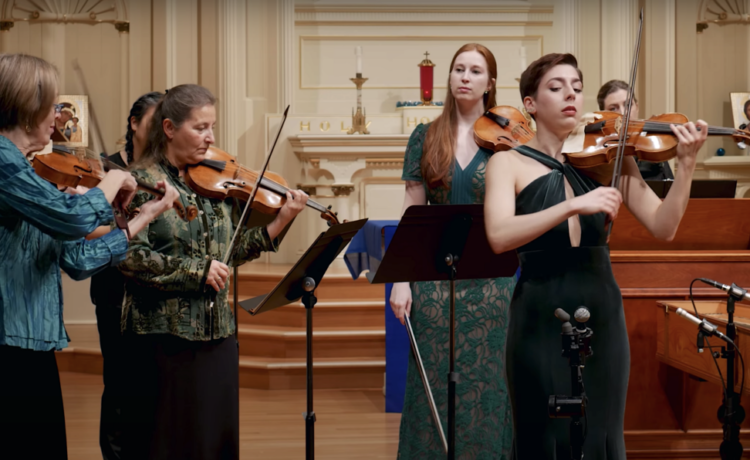
The San Francisco-based early music ensemble, Voices of Music does so beautifully, above, with a video playlist of live performances given between 2015 and 2018, with the four concertos edited to be presented in their traditional order.
Voices of Music co-directors David Tayler and Hanneke van Proosdij were adamant that these high quality audio recordings would leave listeners feeling as if they are in the same room with the musicians and their baroque instruments. As Tayler told Early Music America:
We did tests where we sat in the audience listening to the mix. We stopped when we got to the point that it sounded like sitting in the audience. We didn’t want something that looked like a concert, with a CD playing in the background.
Multiple stationery cameras ensured that the mostly standing performers’ spontaneous physical responses to the music and each other would not pass unremarked. As tempting as it is to savor these joyful sounds with ears alone, we recommend taking it in with your eyes, too. The pleasure these virtuosos take in Vivaldi and each other is a delight.
You also won’t want to miss the English translations of the sonnet, broken into subtitles and timed to appear at the exact place where they appear in Vivaldi’s 300 year-old score.
Spring:
Allegro — 0:00
Largo — 3:32
Allegro — 6:13
Summer:
Allegro non molto — 10:09
Adagio — 15:31
Presto — 17:46
Autumn:
Allegro — 20:42
Adagio molto — 26:14
Allegro — 28:25
Winter:
Allegro non molto — 31:56
Largo — 35:29
Allegro — 37:25
While the audience reactions were edited from the presentation above, we’d be remiss if we didn’t direct you to a playlist wherein these virtuoso players are seen graciously accepting the applause of the crowds who were lucky enough to catch these performances in person.
Note: An earlier version of this post appeared on our site in 2021.
If you would like to sign up for Open Culture’s free email newsletter, please find it here. It’s a great way to see our new posts, all bundled in one email, each day.
If you would like to support the mission of Open Culture, consider making a donation to our site. It’s hard to rely 100% on ads, and your contributions will help us continue providing the best free cultural and educational materials to learners everywhere. You can contribute through PayPal, Patreon, and Venmo (@openculture). Thanks!
Related Content:
See Vivaldi’s Four Seasons Visualized in Colorfully Animated Scores
Why We Love Vivaldi’s “Four Seasons”: An Animated Music Lesson
Ayun Halliday is an author, theatermaker, and the Chief Primatologist in NYC.