

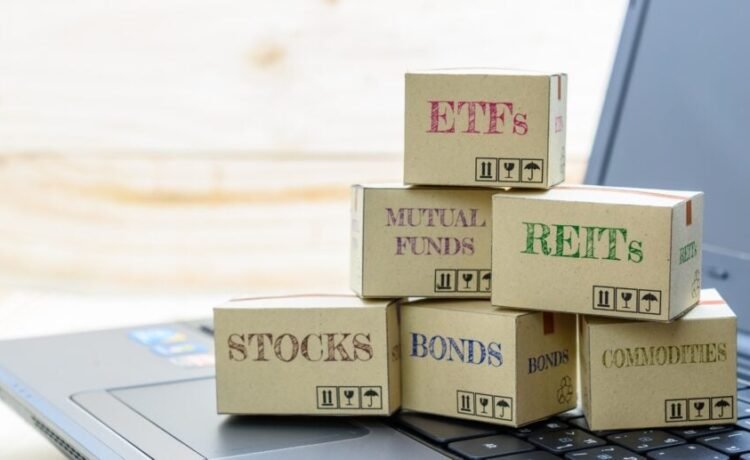
Every time I’ve tried to get “clever” and pick “the next hot investment,” life crammed some humble pie down my throat. I don’t do that anymore.
In my stock investments, that means broad index funds instead of picking individual stocks. Large cap to small cap, U.S. to international, every industry: I’m in it.
In my real estate portfolio, that means spreading small ($5,000 to $25,000) investments out across every axis you can imagine. Here are those six axes I make sure I diversify amongst.
1. Geography
I’ve invested in over 40 passive real estate investments, spread over 16 states and dozens of cities.
I have the humility to know that I can’t repeatedly predict the next hot market. I might get lucky on the first one or two, but the law of averages will catch up with me sooner or later.
So? I put the law of averages to work for me. Rather than parking $50,000 to $250,000 in a few real estate investments and hope I picked a hot market, I practice dollar-cost averaging. Every month, I invest $5,000 or more in a new deal.
Some will perform great. Others may struggle. Most will perform around the middle of the bell curve.
That’s OK. I can sleep at night knowing that the law of averages has my back.
2. Asset Class
The same principle applies to asset class.
My co-investing club looks at multifamily, industrial, land, mobile home parks, storage, and more. Again, we’re not trying to pick the next hot asset class. We know that by diversifying our investments, we’ll get exposure across the spectrum and insulation against unpredictable crashes.
Sometimes investors even get multiple asset types in the same property. “One of my best diversification moves was purchasing a multifamily property with 10 storage units attached,” explains active investor Austin Glanzer of 717 Home Buyers. “The storage units help offset the mortgage and require very little upkeep. Tenants rarely reach out about them, yet they significantly increase the NOI and value of the property.”
3. Debt vs. Equity
Taking that asset diversification a step further, our co-investing club also invests in secured debts, not just equity investments.
On the debt side, that looks like private notes secured with a first-position lien against real property, with a low loan-to-value ratio (LTV). For example, last year we lent money at 15% interest to a land investor to help him expand his business. He put up his own home as collateral, with a first-position lien at 65% LTV.
On the equity side, we invest in a mix of private partnerships, syndications, and equity funds. These don’t pay as much income up front, but we get to participate in the upside profits on the back end when they sell. They also have the potential to pay out “infinite returns.”
Debt investments pay a high-income yield, on a predictable schedule. They also mature and close out at a predictable timeline, often sooner than equity investments.
4. Timeline
I want to stagger when my money comes back to me, which means diversifying across investment timelines.
I’ve invested in nine-month notes, for a quick turnaround. And I’ve invested in long-term investments that won’t close out for seven to 10 years—and everything in between.
First, I have to find a place to redeploy that capital, which I don’t want to have to do all at once. Dollar-cost averaging, remember?
Second, I have to pay taxes on capital gains when an equity investment sells for a profit. I don’t want all of those hitting in the same year and driving my tax bracket through the roof. (Although I do practice the lazy 1031 exchange, which certainly helps with that!)
Finally, some people actually want to live on these returns. I’m not quite there yet, but many of my fellow members in the co-investing club want staggered repayments to cover some or all of their living expenses. Ever hear financial planners talk about bond ladders? It’s the same concept, but with passive real estate investments.
5. The Operators
Active investors often rant at me about how they want total control over their investments and don’t want to invest with other operators. I even know a few passive investors who only stick with a couple of operators.
I totally disagree with them. I want to diversify across many different operators, and only increase my position with one after they’ve proven they will steward my money well.
Even if you think that you or some other operator is the most competent investor in the world—which I’d challenge—that still leaves you with key principal risk. What if you have a stroke tomorrow and become incapacitated? Or die? Or something happens to a loved one, and they put everything else in their life on pause while they deal with that?
Then there’s the fact that you just don’t know how skilled an operator is until they’ve lived through a couple of market cycles. I can tell you firsthand that when I was buying properties actively in my 20s, I thought I was hot stuff. Then 2008 hit, and I got a splash of cold water in the face.
I’ve invested with dozens of operators. Some had absolutely sterling reputations when I invested with them, and they later disappointed me. Others have proven to manage my invested money with skill and integrity.
But it’s hard to know for sure until you take that leap with them. This is why I leap with $5,000 first, then maybe $20,000, then $50,000.
Many members of my co-investing club also invest actively. But they diversify their real estate portfolio by investing passively, across all the axes outlined.
6. Mix in Related Businesses
In some of the industrial real estate investments I’ve made, I’ve gotten direct or indirect exposure to the industrial business itself.
For example, we invested in an industrial deal a couple of years ago where we got an ownership interest in the business in addition to the property. The deal went full cycle in late 2025, paying out an annualized return (IRR) of 27.6%. Most of that profit came from expanding the business, not improving the real estate.
Active investor David Musser explained to me how he diversified his own real estate investments to include a local business: “We own rental properties, and we diversified by opening a nearby e-bike store. By hiring the right people, the business runs mostly passively. On top of that, we Airbnb the apartment above the shop, which creates an additional income stream.”
There are always ways to diversify further.
Earn Through Concentration, Keep and Grow Through Diversification
Most people earn their money through one or two active income streams: their job and/or a small business. Perhaps they even win big on an employee stock option or a crypto payout.
That’s concentration. There’s nothing wrong with it, but it can disappear overnight.
You keep and grow your wealth through diversification. One of my 44 passive real estate investments might get hit with a fire, a hurricane, or a lawsuit. A crash in one sector or city might bruise the few investments I have there.
But as a whole, my portfolio will keep growing over time. This is how I went from $0 to $1 million in less than seven years.
My investing philosophy of dollar-cost averaging with small amounts every month helps protect me from risk. It doesn’t mean nothing ever goes wrong, or that every investment pays out huge returns. But it does mean that my returns form a bell curve rather than a few isolated blips on the sonar screen, and the law of averages helps protect my money.